Building the Future HVAC Workforce
March 26, 2026
Building the Future HVAC Workforce
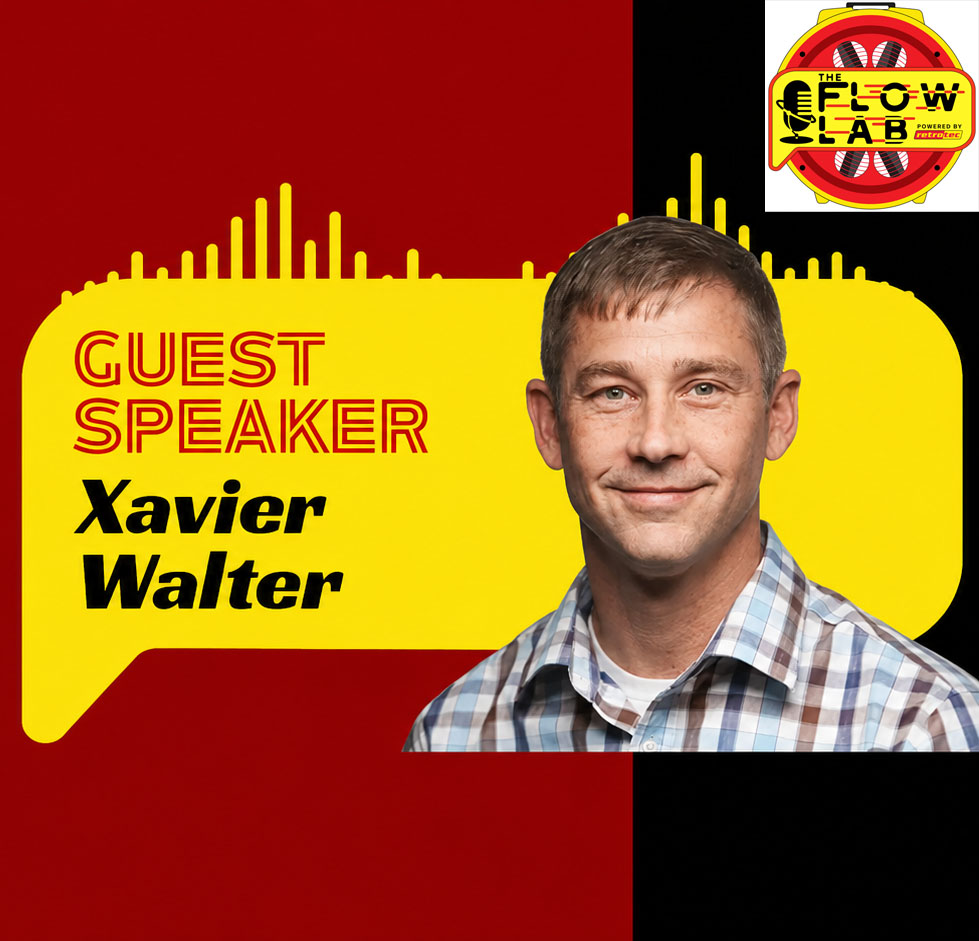
In a recent Flow Lab episode, Ben Walker and Sam Myers sat down with Xavier Walter of the Building Performance Association to talk about one of the biggest questions facing the industry right now: who is going to do this work, and how do we prepare them to do it well?
That conversation covered a lot of ground. Workforce development. Apprenticeship. The relationship between HVAC and weatherization. The value of understanding the house as a system. The role of training, conferences, and mentorship. Underneath all of it was one theme that kept surfacing.
The future of HVAC will belong to contractors who can solve the whole problem, not just swap equipment.
That is a big shift, but it is already happening.
The workforce gap is real, but the bigger issue is how we train people
Every trade is feeling the pressure of the workforce shortage, and HVAC is no exception. Shops need good people. Smaller contractors especially need a way to hire, train, and retain workers without burning time and money they cannot afford to lose.
As Xavier pointed out, the old model has often been to push as many people as possible through training seats, hope they come out job-ready, and then figure the rest out later. That does not always work well for employers. A contractor still has to bring that person on, teach them how the real work happens, and absorb the cost of training time that is not billable.
That is part of why apprenticeship and employer-centered training matter so much.
When workforce development supports the employer, not just the classroom, it becomes easier to give new workers a real pathway. Not just “here is a credential,” but “here is what month one looks like, here is what you will learn, here is how you will grow, and here is where this can take you.”
That kind of structure is good for employers, and it is good for workers too. Especially now, when younger tradespeople want more than a paycheck. They want clarity. They want purpose. They want to know there is a future in the work.
For existing homes, HVAC is still the tip of the spear
If a homeowner has a comfort complaint, they are probably not calling a building scientist first.
They are calling an HVAC contractor.
That makes HVAC the front line for a lot of the problems that actually start somewhere else. Uneven temperatures. High humidity. Dust. Odors. Rooms that never feel right. Rising utility bills. Systems that seem to run forever and still do not deliver comfort.
The homeowner experiences those as heating and cooling problems. But often, they are house problems.
That is where building science has to enter the conversation.
Xavier made the point clearly: the HVAC contractor is still the comfort specialist in the homeowner’s mind. But the contractors who separate themselves today are the ones who understand that equipment is only part of the picture. If the envelope is leaky, if airflow is imbalanced, if the attic is connected to the house in all the wrong ways, if moisture is moving where it should not, then even a great piece of equipment can end up looking bad.
The callback does not care whose fault it was.
It still lands on the contractor.
Why building science makes HVAC contractors better
One of the strongest takeaways from this episode was that HVAC contractors do not need to become full-time energy auditors to benefit from building science. But they do need enough knowledge to make better decisions.
Understanding the house as a system changes the way a contractor approaches a job. It changes how they interpret complaints. It changes how they size equipment. It changes how they evaluate airflow, pressure, insulation, leakage, and ventilation. It changes the quality of the questions they ask the homeowner.
And it changes results.
The old way of doing business is guessing, relying on rules of thumb, replacing a box and hoping it fixes everything. That doesn't cut it anymore. Today’s homes, systems, expectations, and liabilities are too complex for that.
The good news is that the path forward does not require magic. It requires measurement, training, and better partnerships.
That might mean taking a building science fundamentals course. It might mean learning how blower doors, pressure diagnostics, or envelope leakage affect system performance. Getting the IDL certification from a BPI certified trainer. It might mean building a relationship with an energy auditor or weatherization contractor who can help diagnose what the equipment alone cannot explain.
In other words, it means sharpening the pencil.
Weatherization and HVAC should be working together more often
This is one of the most practical parts of the conversation.
There are weatherization contractors and home performance pros all over the country with exactly the skills many HVAC contractors need nearby: air sealing knowledge, envelope diagnostics, blower door testing, insulation expertise, and experience solving comfort issues from the shell inward.
At the same time, there are HVAC contractors getting called into homes every day where the customer’s real problem goes beyond equipment.
Those two worlds should overlap more than they do.
When they do, better things happen. Systems get sized more accurately. Installations perform better. Customers get more complete solutions. Quality control improves. And the contractor is less likely to inherit a comfort complaint that was really caused by the building enclosure all along.
Xavier also pointed out something important here: this is not just philosophically better. It is financially better.
Fewer callbacks matter. Word-of-mouth matters. Solving the problem the first time matters.
If a homeowner ends up saying, “They actually fixed it,” that is worth a lot more than a fast equipment swap that leaves the underlying issue untouched.
Homeowners are not buying energy savings first
This was one of the clearest and most useful points in the whole episode.
People do not usually call because they want a slightly lower utility bill. They call because something feels wrong.
Their bedroom is too hot. The house smells musty. There is too much dust. Someone has allergies. The upstairs never matches the downstairs. The mold smell will not go away. The house does not feel healthy. The system runs all the time and nobody is comfortable.
Yes, efficiency matters. Operating cost matters. But most homeowners buy on pain first.
That is why better conversations matter so much.
Contractors and practitioners who ask good questions — how do you use the house, where are you uncomfortable, when does it feel worst, what have you noticed, what has changed — are much more likely to get to the real issue than the ones who walk in looking only for tonnage and equipment age.
This is also where the industry may be headed more broadly. Xavier made the case that over time, the market may rely less on heavy subsidy and more on consumer demand for comfort, safety, health, and performance. If that happens, the contractors who know how to diagnose and communicate those outcomes will be in the strongest position.
Because nobody gets excited in the grocery store about saving thirty dollars a month.
They get excited that their home finally feels better.
Conferences still matter because the industry is learned in community
Another thread running through the episode was how much this work depends on learning from other people.
The National Home Performance Conference hosted by BPA is one of those places where that happens at a high level. It is where HVAC contractors, weatherization pros, trainers, manufacturers, auditors, and building science practitioners can get in the same room, compare notes, learn from experts, and put hands on tools and methods they may not see in daily practice.
For someone new to this space, that kind of event can shorten the learning curve fast.
For someone established, it is a reminder that there is always more to learn.
That matters because the industry does not move forward on equipment alone. It moves forward through shared knowledge, mentorship, and a willingness to bring newer people into the fold.
Xavier closed the episode on exactly that note. Those of us who have been fortunate enough to build careers in this work have some responsibility to help the next group do the same. That means being generous with knowledge. Answering questions. Sharing what works. Being less proprietary and more useful.
The industry gets better when expertise is passed along.
So where is the industry headed?
Probably toward a version of itself that is more measured, more connected, and more customer-centered.
More HVAC contractors will need building science fluency. More weatherization and home performance pros will need stronger partnerships with the private market. More employers will need structured pathways to train and retain workers. More homeowners will expect contractors to solve comfort, health, and performance issues in ways that are visible and provable.
That future is not theoretical. It is already showing up.
The contractors who thrive in it will likely be the ones who stop thinking in silos and start thinking in systems.
Not just equipment. Not just insulation. Not just code. Not just rebates.
The whole house. The whole customer problem. The whole job.
That is the work.
Final takeaway
The HVAC workforce challenge is not just about finding more people. It is about preparing better problem-solvers.
That means training people to think beyond the box they install. It means giving employers tools to build real career paths. It means helping contractors partner across trades instead of operating in isolation. And it means listening closely enough to homeowners to understand what they are actually trying to fix.
Because in the end, the industry does not win by replacing equipment faster.
It wins by making homes safer, more comfortable, and more reliable for the people living in them.
And the pros who can do that consistently will always have work.
Want to hear the full story?
Listen to our conversation with Xavier Walter on The Flow Lab Podcast – now streaming wherever you get your podcasts.





The Flow Lab Podcast by Retrotec
Retrotec has launched The Flow Lab podcast to connect you with the leading minds within the building science industry. We interview everyone from long-time experts to the newest innovators, exploring the latest technology advancements and industry news. Subscribe on the Retrotec YouTube channel and wherever you listen to podcasts. Like and subscribe to become part of the Flow Lab community!
Recent Posts