Register Login
Pressure Relief Vents

Damage caused by peak pressures is a huge potential liability that clean agent system installers must deal with.  During a clean agent discharge, the enclosure must have sufficient leakage to prevent excessive pressures from building, but be tight enough to satisfy retention time requirements.  To achieve this balance, Retrotec designed these pressure relief vents for use in buildings that incorporate clean agent fire suppression systems.

Here are some brief videos about the function of these vents:

  
image up
image down

Why are Pressure Relief Vents a Good Idea for Buildings with Clean Agent Fire Suppression Systems?

The graph shown below is actual data recorded from a static pressure probe during a discharge test. The maximum pressure reached here is equivalent to about 20 pounds per square foot, which is double the “specified enclosure pressure limit” for most enclosures.


Excessive peak pressure is normally resolved by the installation of a pressure relief vent but no comprehensive research had been done to determine the exact amount of venting required, until now. Retrotec has just completed a five-year study along with Fike, 3M, Ansul, Kidde-Fenwal, DuPont, Tyco, and Chemetron in which four inert agents and four halocarbons were discharged into the same test chamber at varying leakage and environmental conditions, to accurately determine the relationship between peak pressure and other variables.

Not taking into account potential peak pressure in an enclosure can have expensive consequences, which can be seen in the pictures below. NFPA 2001 requires a peak pressure analysis (section 5.1.2.2(10) states that “an estimate of the maximum positive and the maximum negative pressure, relative to ambient pressure, expected to be developed upon discharge of agent” is required) but offers little help in determining peak pressure and relief vent area.


Pressure Relief Vents (PRV) reduce peak pressure

In many cases, PRVs fail to open at a low enough pressure to prevent damage. If a vent starts to open at 250 Pa, the peak pressure will rise to almost 400 Pa as shown below. Opening at 60 Pa reduces this peak to 150 Pa while not opening at all yields 690 Pa.


Additionally, many pressure relief vents are electronically or pneumatically actuated. This can cause reliability issues, especially during a fire when controlling circuits may be damaged. Gravity actuation is the most failsafe method.

Retrotec is pleased to offer pressure relief vents for both inert agents and halocarbons along with our state of the art software that will accurately predict peak pressures and required free vent area based on live test data.


RSH PRV’S for Inert Agents

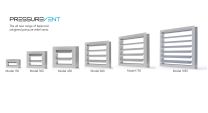
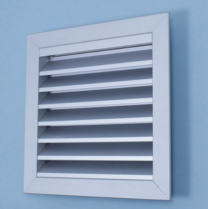
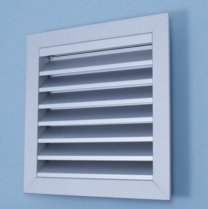
The RSH Series of PRV’s are gravity actuated; they are fully closed at 80 Pa and fully open at 95 Pa, ensuring safe dissipation of peak pressure while remaining unaffected by HVAC pressures.


RSH Dual Flow PRV’s for halocarbons

The graph below shows live test data from an FM200 discharge.  As observed, the temperature change in the enclosure caused by the agent discharge creates a negative pressure spike which is then followed by a positive pressure spike caused by the nitrogen blowdown.


The RSH Dual Flow PRV’s have been engineered to open in both directions, eliminating the need to install 2 single flow vents in opposite directions, saving both time and money.

RSH PRV’s have a 2 hour fire rating as certified by EN1363, and are the only pressure relief vents to have gone through live tests, witnessed and verified by the BRE (Building Research Establishment) Fire and Security.


Product ID:
  • RSH700
  

SALES & SUPPORT


Hours of Operation

Monday - Friday
8:00AM to 4:00PM PST


Contact Our Head Office
TEL 604.732.0142
FAX 604.737.0162

Warehouse Address
1060 E. Pole Road
Everson, WA 98247

Sales
TEL: 1.855.738.7683 (toll free)
Submit Sales Request

Support
TEL:  604.732.0142

Submit Support Request

Calibration
Email calibration@retrotec.com


Terms Of Use  ·  Privacy Statement  ·  Copyright 2010 by Retrotec Inc., Retrotec Ltd.

Contact Webmaster